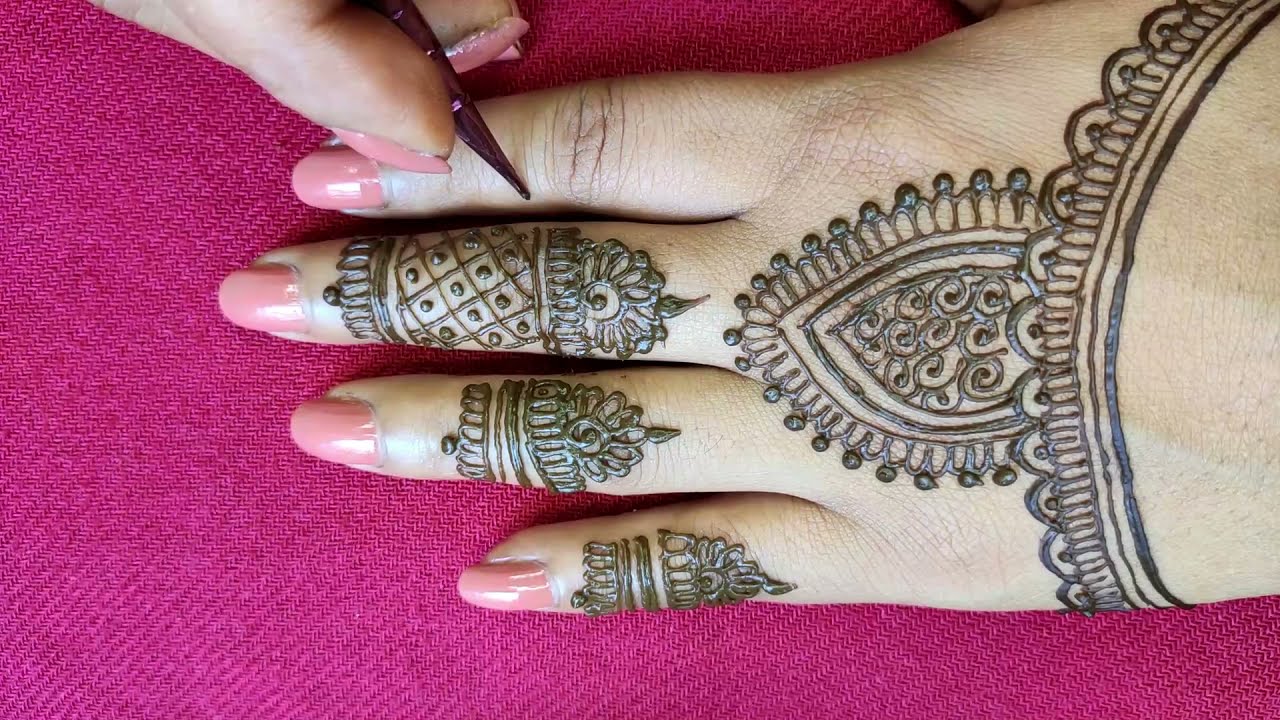
Henna tattoos represent the unique beauty of tropical South Asia. Henna also referred to as Mehndi, is a woven plant that comes from the Mehndi plants that grow in India. Henna is used for weaving fabric, creating patterns for decorative art and to dye fabrics for traditional Simple Arabic Mehndi Indian clothes. The term "henna" comes from the Hindi word "ha", which means "dye" and "ndi" meaning "hook". Because of its highly decorative design, many artists prefer to use it for decoration, especially when creating intricate artwork or tattoo designs.
A Mehndi design is made of an organic plant-based liquid or powder, mehndi designs are naturally fade-able and pain-free. Henna is available in many colors of blue, red or orange, and appears beautiful on a variety different skin shades. It emits energy and positivity which is ideal in body painting. Since the purpose behind Mehndi patterns is creating a striking image, artists choose only the most beautiful, vibrant colors of Henna. A slight alteration in color can make a a dramatic difference in the beauty of the image.
The word " Mehndi" actually comes from the Hindu word " Mehndar," which means "tattoo." In the present, Mehndi tattoos remain prevalent on women who wish to improve their appearance, while men often choose these tattoos to highlight their masculinity. This art form of Mehndi tattoos has been practiced for many thousands of years ago. Today, the tradition continues and women from every walk of life opting for Mehndi designs as body art.
The majority of Mehndi tattoos are very small and are applied to places where there is only minimal swelling. Because the dye in Mehndi ink is opaque it stains the skin in such a way that the color changes with exposure to sunlight, sweat cold or exercising. Due to this, many artists prefer to work using lighter hues of henna pigment on women with darker skin tones. Furthermore, henna designs are used to create intricate patterns on lighter-skinned individuals, but dark skinned people can also get complex designs of henna applied to their skin. No matter what type of henna, the final product is always stunning, appealing and intriguing.
With tattoos becoming more and more common in the mainstream, artists of all sorts are becoming inventive and creating interesting designs. One of the most fashionable trends of recent times is to incorporate unique henna designs to create eye-catching, yet subtle tattoos around the eyes, face and eyebrows. Also, skin with natural glowing has become a favorite look for many artists as well as people with dark skin, and those who have white skin. Since a natural sheen tends to reflect light more effectively than glowing skin an effect that resembles a sheen could be achieved with black or dark henna ink over the body. Whether the tattoo looks like diamonds, a halo or a swirl, or star eye-catching tattoos with beautiful hues can result in an extremely striking visual effect.
While traditional designs using henna are very popular, many contemporary tattoo artists are beginning to make use of natural plant dyes to replace it. Dyeing plants like aloe vera marigold, aloe vera, and lemon balm have an attractive shimmer that mimics the natural appearance of the human skin, resulting in an amazing eye-catching effect. These natural skin brighteners are apply to your face using a brush or pad, and then after a couple of hours, the skin is rinsed to reveal a clean and radiant complexion.
Henna patterns that give an amazing sheen are especially well-liked by ethnic and tribal people. Because these designs tend to fade over time, an attractive pattern is able to be applied to the skin for some time before being removed to reveal an unnatural, glowing complexion. The most common henna designs seen on skin include palm trees and fish, birds, flowers, and dragonflies. The shimmer of these tattoos may create amazing contrasts depending on the color used. It isn't unusual to see different colors of henna applied to the same design, resulting in an incredible array of hues which can really brighten the eyes.
It may be a bit surprising to some people that mehndi dye can be utilized for skin care. While most mehndi patterns are made of extracts from a specific herb, this paste is able to be applied to nearly any surface. Mehndi is often combined with other dyeing agents in order to create more intricate patterns or designs that are unique. Combining plant extracts with the traditional process of dyeing create a stunning range of vivid henna designs which can be applied to the skin to give a striking effect. Gorgeous mehndi tattoos will make you look fashionable and popular for several seasons to come.